Perhaps this famous short poem is the way to start:
Traveler, your footprints
are the only road, nothing else.
Traveler, there is no road;
you make your own path as you walk.
As you walk, you make your own road,
and when you look back
you see the path
you will never travel again.
Traveler, there is no road;
only a ship’s wake on the sea.
(translated by Mary G. Berg and Dennis Maloney)
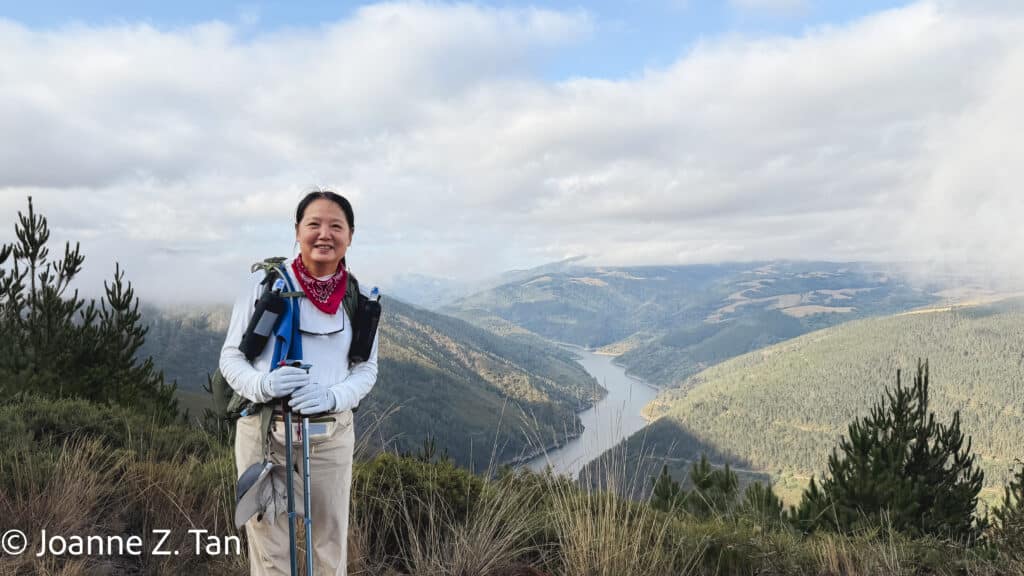
I went to Spain by myself, not knowing Spanish, and spent three weeks there traveling from place to place almost daily.
I trekked for 15 days (with Day 10 as a rest day), around 200 miles (310 kilometers), up and down the Asturian mountains from Oviedo to Santiago de Compostela. Camino Primitivo is considered one of the hardest Camino routes, but also one of the most scenic.
– To watch this as a 17-minute video, with photos
– To listen to this as a 17-minute podcast
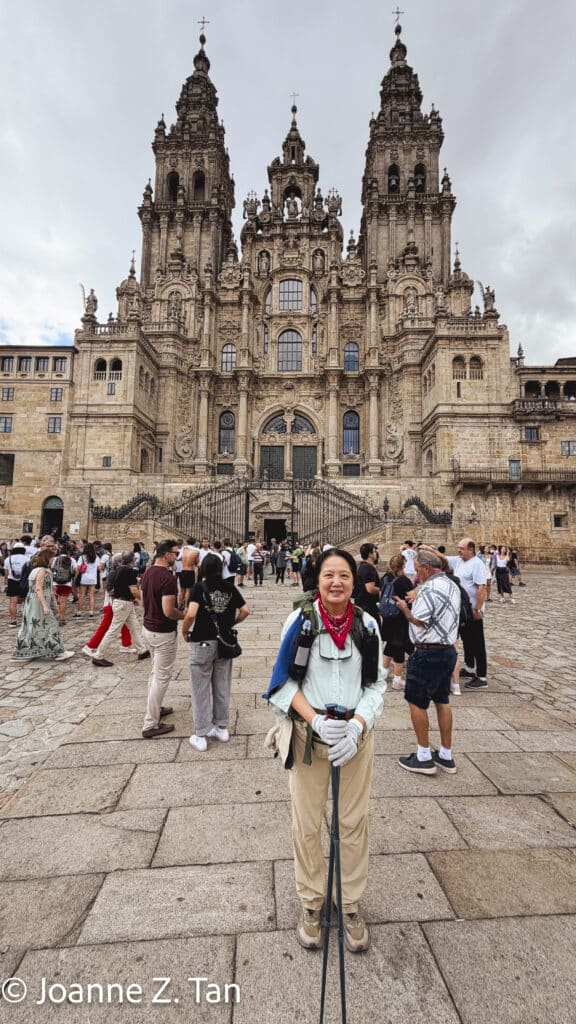
I visited five old Spanish cities (Madrid, Leon, Segovia, Toledo, Alcala de Henares) on my own before and after hiking Camino Primitivo, in addition to the three cities on my Camino: Oviedo, Lugo, and Santiago.
I came back with more wisdom, peace, endurance, independence, tolerance, humility, willpower, and goal-oriented determination.
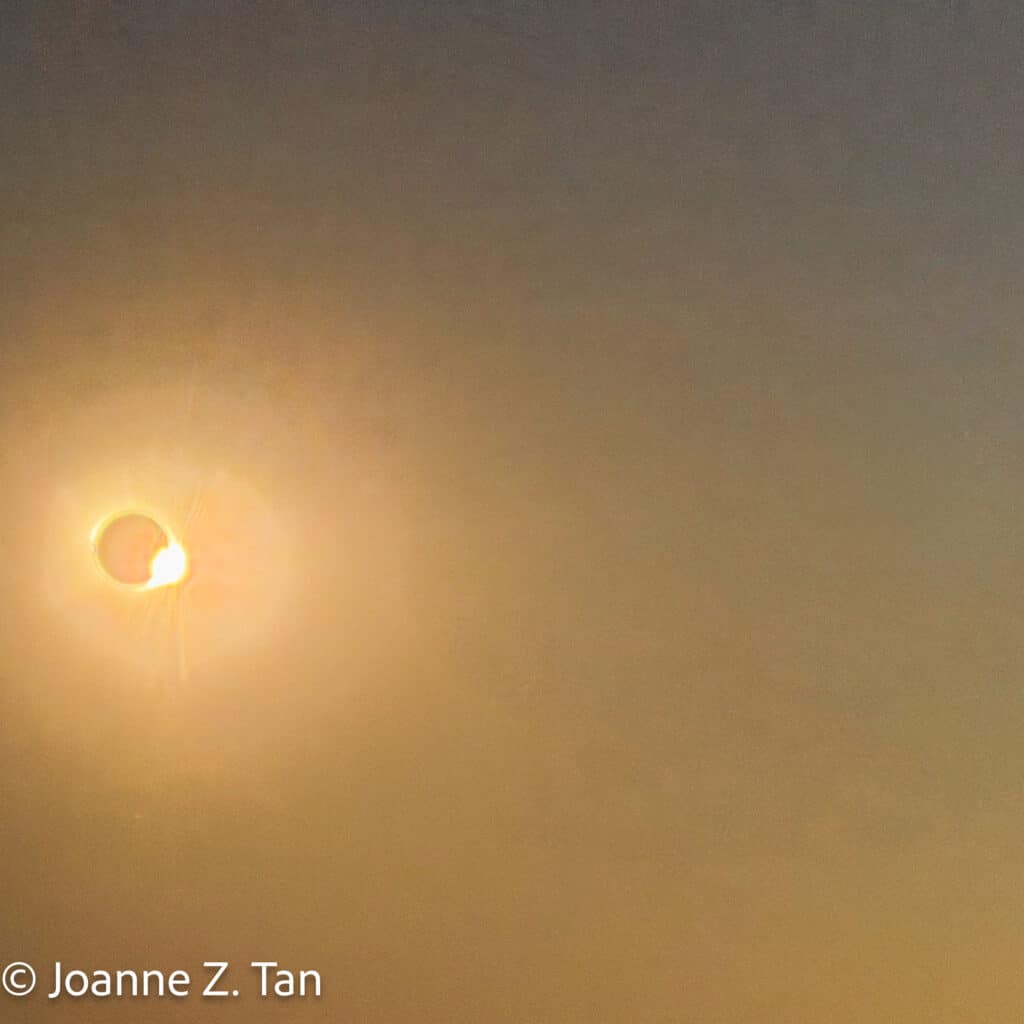
Before embarking on the Camino, I spent three days in Madrid’s art museums. After Santiago, I went to Leon by myself to visit the city and see the full solar eclipse. Then I traveled to Segovia, Toledo, and Alcala de Henares before flying back from Madrid to SFO.
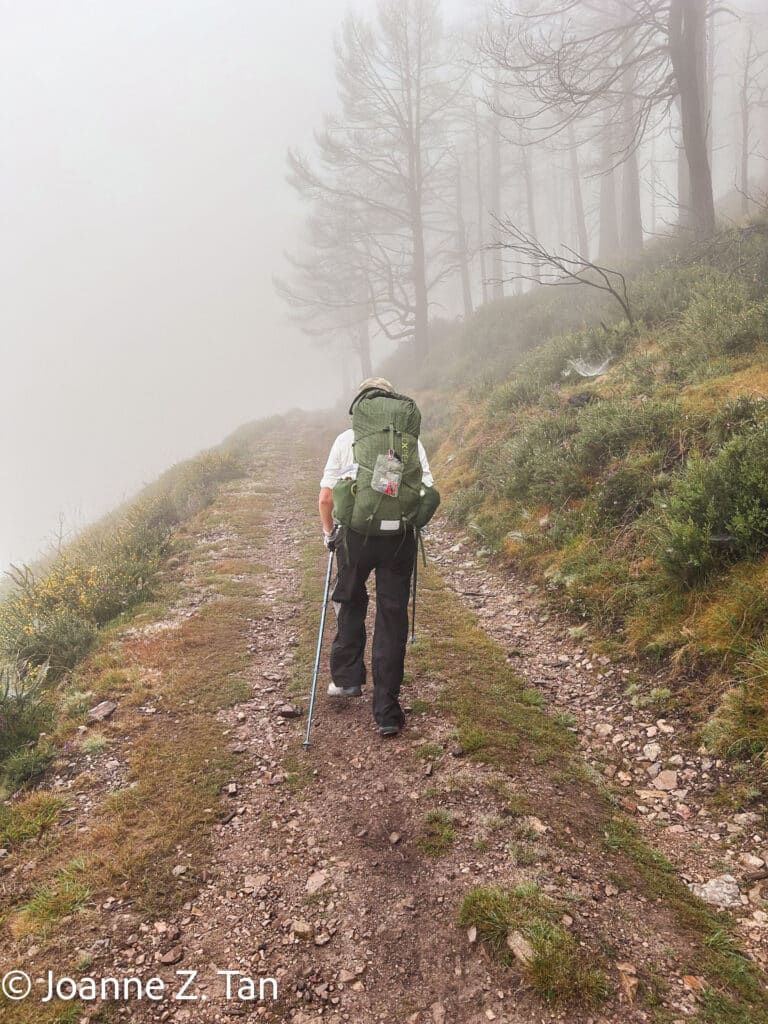
Walking about 15 miles a day for two weeks in the peaceful Spanish countryside slowed down the digital speed of life, and made me more conscious of slowing down and being deliberate. Trekking in the misty mornings through villages and rural landscapes instilled its quiet maturity in me. I recently developed a liking for economy of words, and for slowness in action and judgment.
The three-week adventure was also a photographic feast: I took thousands of photos, some of them spectacular. I will process, edit, and upload them later to my photography website.
Though by myself, I was never alone, and never felt lonely. God prepared everything I needed before I even realized that I would need it: from a Spanish teacher on the airplane who was going on the same Camino at the same time, to the Bulgarian herb candies gifted to me by a fellow peregrina (pilgrim), a Bulgarian mother who also hiked the Primitivo with her 18-year-old son. A few days later, these herb candies were the perfect cough drops after I caught a cold virus from a hotel’s AC in Leon.
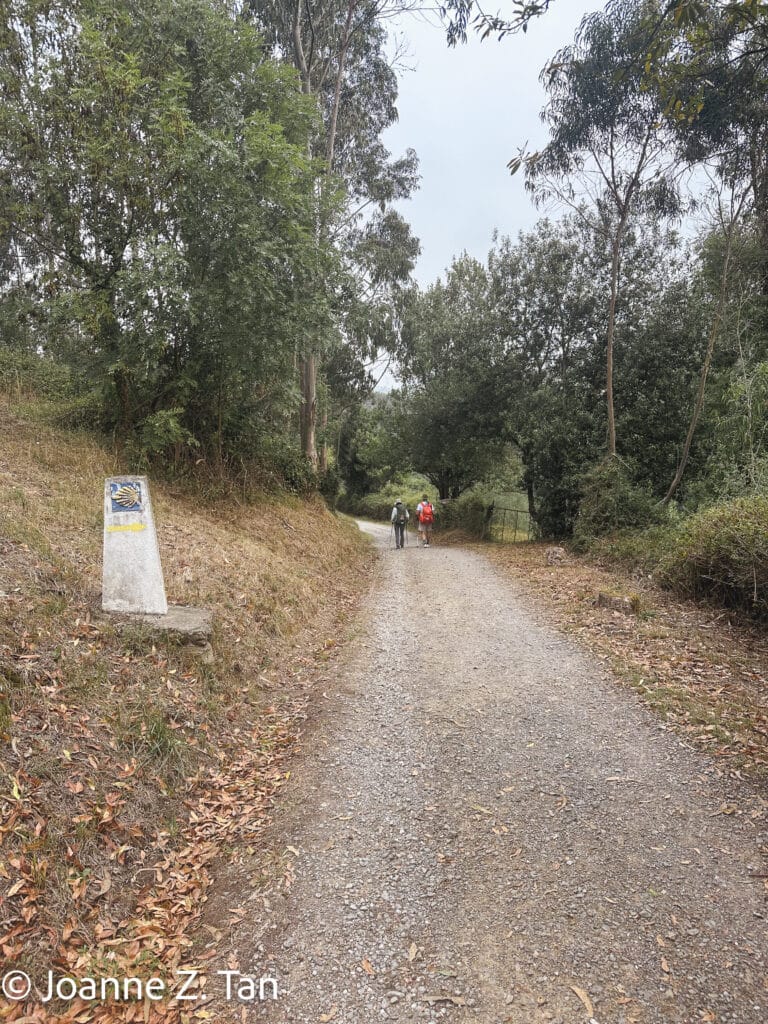
In fact, the best times were those when I was by myself, conversing one on one with God, thanking Him for the awesome mountain views and the people He placed on my journey, and asking Him for guidance. When I was hiking solo, I could allow inspirations to arrive on their terms, I could think, reflect, and admire nature and old buildings without the need to listen to others.
I love local Spanish cuisines and the Spanish people. I was helped so many times by their genuine kindness everywhere and whenever I needed it. God put the right people in my path at the right time, and taught me to trust myself.
He also placed them in my care. Personally, an accomplishment more significant than hiking the Camino itself was that I kept my promise to God and to the hiking partner He put in my care, and endured till the end. After all, it is a pilgrimage on which I literally walked the talk.
I found that the most challenging part was neither language-related (thanks to Google Translate) nor physical, but psychological and relational, in dealing with my own primordial fears and with my hiking partner. If I were ever to do another Camino (not Primitivo again) in the future, unless I am blessed with a mutually compatible hiking companion whom I know well, I would rather do it by myself without being tethered to anyone, speaking Spanish or not.
The continuous trekking, day after day, added stress and pain to my knee and ankle. Seeing me limping in pain, a French woman I met on the Camino and hiked with for a day gave me her pain relief cream, even though she might have needed it.
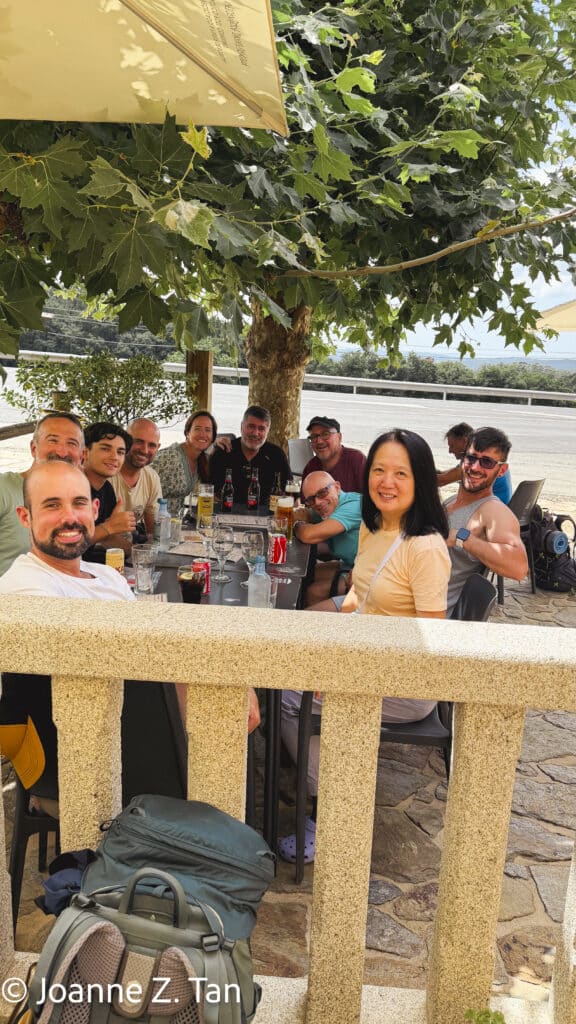
I felt the best of humanity from the pure kindness of others without any strings attached, without any expectations for reciprocity: from a Spanish mother and her daughter who offered help with Spanish language without being asked, and from the good-natured, hospitable group of Spaniards with whom I shared the same hostel room.
I also experienced the not-so-good part of humanity, which taught me to accept people where they are, the way they are, however different or even wrong. Sometimes the way to deal with it was to ignore, to confront, or to respond with tacit understanding. Forgiveness and letting go, when practiced, remove all undue weight and obstacles.
The Asturian mountains were beautiful, but not comparable to the awesome mountains and magnificent landscapes in the western US. Even though I could sleep in a bed and take a shower at each albergue (hostel), I still prefer the total wilderness experience of hiking and camping in the high country of Yosemite or other national parks in the US. If walking the Camino was a spiritual journey (it is also a mental and physical endurance test), I boil down my Christian faith to two words: forgive and repent. Without these, there is no way to reach love, peace, and joy.
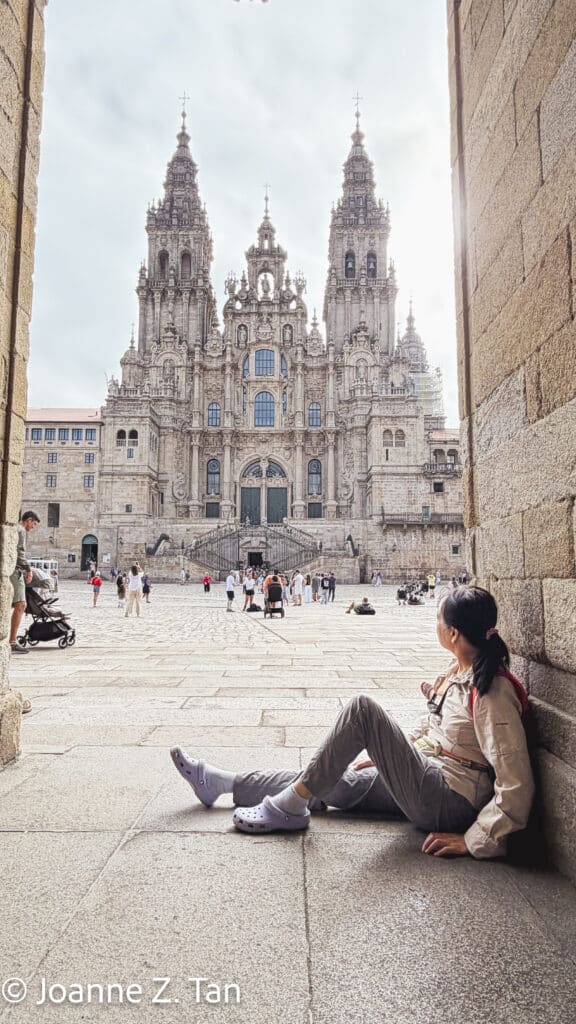
Not being a Catholic, arriving at Santiago de Compostela was more symbolic and metaphoric. Santiago is a goal. Life revolves around goals. I am now better prepared for my next career goals. Climbing many mountains and hills on the Camino Primitivo has given me a focused, single-minded approach.
I returned with more calmness and a new mental habit of minimizing my response to stress triggers (though not successful every time.) I gained a detached way of approaching challenges in life.
This budding, unfazed and unfrazzled approach resulted cumulatively from dealing with a number of challenges. These included dealing with an unavailable Renfe train (Renfe is Spain’s national railway operator), the last-minute dash to the airport to get the last seat on a flight to Oviedo, the changing dynamics with my hiking partner, and problem-solving in unexpected situations. Sometimes I relied on others’ help, sometimes I resorted to a combination of intuition, judgement, and resourcefulness of my own.
Among so many things I have learned, here are a few that stood out:
It is harder to trust and follow my own instinct, which, in my opinion, is one way God sends me messages. It takes focus and practice to tune out external noises, temptations, self-doubt, and distractions that override my own instinct. Every time I ignored what my instinct told me, I suffered the consequences: Had I listened to my better judgment not to turn on the AC and thus not needed to use the hotel’s blanket, I might have avoided the viral cold I believed came from the AC’s contaminated filter and the bed bugs from the hotel blanket.
Every time I heeded my instinct, things turned out right: not listening to a Renfe employee’s wrong advice and finding the correct direction to the right cercania (commuter train) by seeking a second opinion from the ticket office; not following the crowd on the wrong path on the Camino, etc.
Many men and women chose to walk the Camino Primitivo solo. A lot of them were going through transitions in life. Some were going to start a new career, taking several weeks off between jobs to walk the Camino. Some quit their jobs and were in search of themselves. On Primitivo, most were in their 30s, 40s, or 50s. Many were teachers. It makes sense since they have long summer vacations when schools are closed.
On the more popular Camino Francés, there were younger crowds in their 20’s.
Most non-solo pilgrims walking together were couples in stable relationships or were related by blood. I saw families: an entire nuclear family, mother and daughter, mother and son, sisters, brothers, father with adult children in their 20s.
Other than families and loved ones, sharing the journey with someone you just met on the Camino usually is not meant for the entire journey. Maybe just a day or two, in hindsight. A couple of days walking, eating, and sharing a hostel room together can reveal a lot about what kind of person we each are.
To me, to keep my Camino as my own experience required intentionality about independence, given the human needs for both community and solitude.
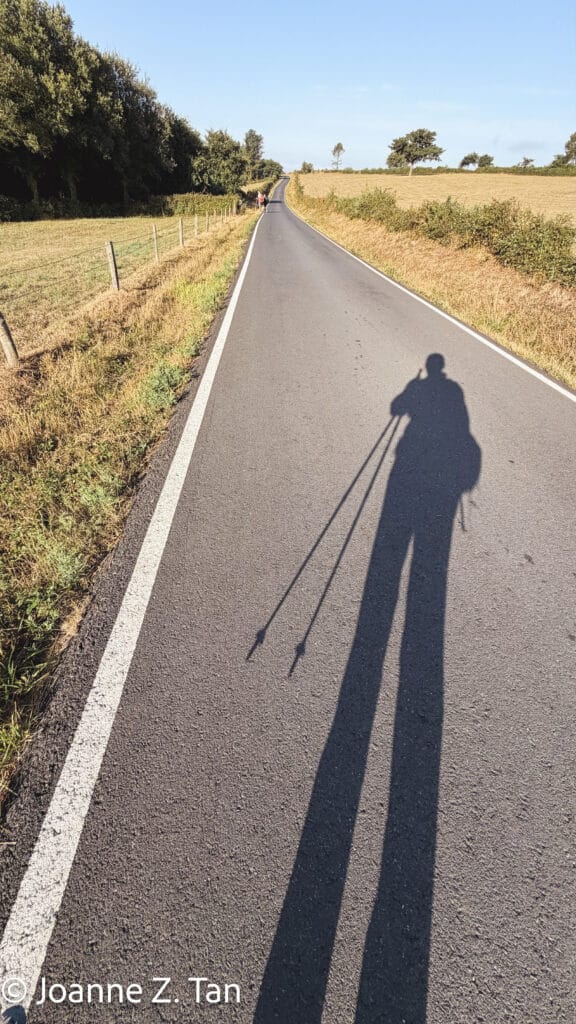
Solitude is far more enjoyable than companionship formed out of convenience. (A completely unfit companion could ruin an adventure experience, as I learned from a previous wilderness backpacking trip in Yosemite.)
Even if the companionship was out of convenience or mutual practical needs, I could still have found solitude by creating my own internal space, sometimes walking alone on the Camino. To make the Camino my own demands a balance between community and self, the need to be social as well as being independent and detached. I wish I hadn’t exerted myself to keep up with the pace of my hiking companion.
A companionship is not enjoyable if it is mainly out of fear (fear of being alone, fear of abandonment, fear of not belonging, etc.), or out of need. Whom I travel with is just as important as where I travel, just like growing a business with a partner. Again, it is better to do it solo than with an unfit partner. Having a great hiking partner can add so much more joy to an adventure. That would be the best.
Human minds are inclined to remember the hurt more than the good. Life is too short. Let the bad rapidly recede in the river of memories. Choose to remember the good memories, forgive others’ frailties, and forgive mine too.
None of the encounters with fellow pilgrims were planned or plannable. In each case I learned something from each person, and then we each moved on. Perhaps that was the beauty of it. No attachment, no expectation, no duty, yet the connection was real. We all have left something with each other: ourselves.
All experiences in life share this passing nature. Passing by every place, every person, and passing through every day, like a dream. You cannot step into the same river of life twice. Each passing moment: let it pass.
Home, sweet home: At the end of every day of trekking, I shared some photos and a brief message with my sons and those in their lives. That connection to the home base anchored my vagabond journey from one new place to another in a foreign country. Towards the end of my third week of Spain tours, the longing for home increased its volume like Maurice Ravel’s Boléro. The Odyssey theme of the pull and push between adventure and going home was felt more intensely as the sojourn extended.
Is the Camino for everyone? I am not sure. It is a unique lifestyle experience. My lesson is that if you can handle both solitude and community, or if you prefer to be left alone, or if you have good companionship, you can enjoy it and learn about yourself and about life on the Camino.
To me, it was a worthy growth experience, mentally, physically, and spiritually. The natural scenery and historical sites I passed through are best accessed, visited, and enjoyed by hiking. Walking many hours, mostly in nature and through villages, day after day, is meditative.
The restorative effect of walking in nature, day after day, connects us to the celestial rhythm of Mother Earth, which is therapeutic and healing.
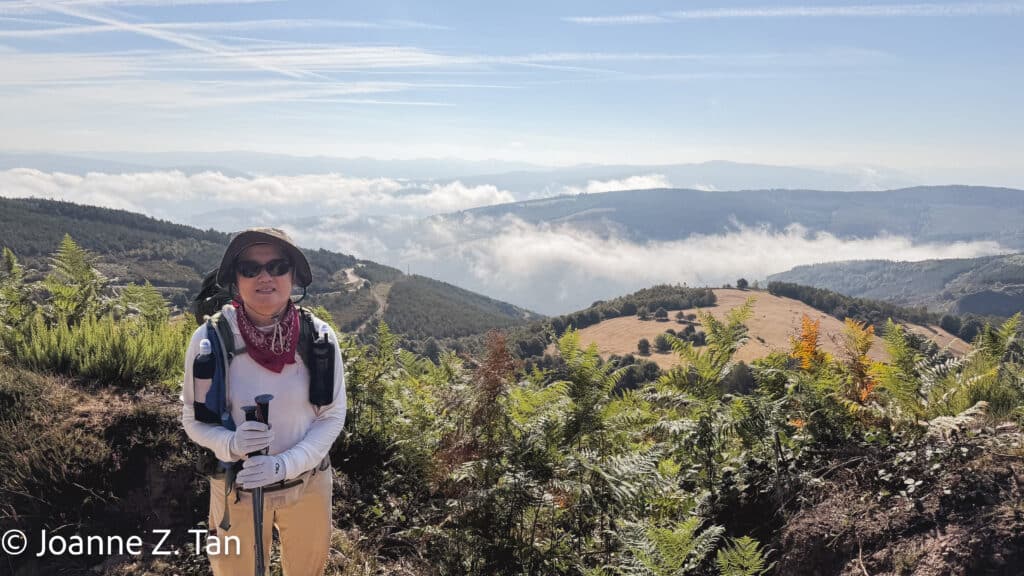
Some people intentionally bring their unresolved issues to the Camino and seek resolutions or closures through walking long miles. Some choose to be open to whatever inspiration comes randomly. I did both and got both.
The Camino is a meeting place of all nationalities. I met people from France, Germany, Belgium, the Netherlands, the UK, Serbia and Montenegro, Bulgaria, Italy, Hungary, Korea, Hong Kong, Australia, the United States, and of course, España.
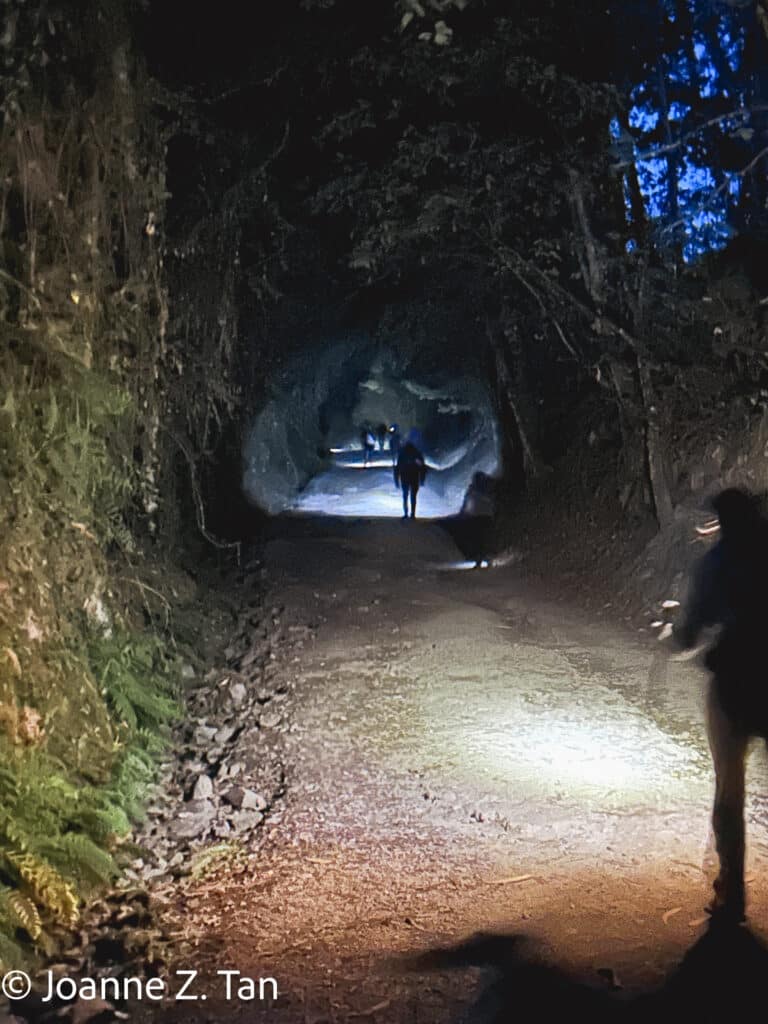
Another unexpected good thing from hiking the Camino was that I came home five pounds lighter. I came home with my Camino habit of rising before dawn, starting the day while it is dark and having an unhurried, quiet morning. I had wanted to do this for so long but never could consistently get up early. Thanks to Spain’s fierce summer sun and hot weather in July and August, I and my hiking companion got up around 5:30 a.m. We hit the trail with my headlamp around 6 a.m. when it was still dark. We did most of the walking during the cool hours in the morning, and wrapped up seven hours of hiking around 1 p.m.
Even though I did not think it was a big deal when I reached Santiago, looking back now, I am so grateful that I did not get sick or injured during the Camino, and completed the journey exactly as scheduled. I realize that I accomplished quite a bit over three weeks, including touring Spain before and after the Camino. This trip has changed me.
I look forward to more adventures in other parts of the world.
This is only a short summary of my three-week adventure in Spain in the summer of 2026. I will get around to writing more details later.
Here are some of the cities I visited other than Madrid, Oviedo, Lugo, and Santiago: